To supplement or not to supplement?
A surprisingly complex question…
Image by Freepik
The question of whether we should give our children a daily multivitamin and mineral supplement comes up frequently, and I’ve flip-flopped in my own parenting approach more times that I care to admit. Parents often feel uneasy if they do and equally uneasy if they don’t. Kids’ supplements usually come as tasty gummies which children gleefully gobble down. But are they a handy insurance policy to cover nutritional shortfalls, an unnecessary expense or downright harmful?
Government guidance for the general population is reasonably robust on the matter. From the age 5 we should be getting all the nutrients we need from our diet with no need to supplement! (With the exception of Vitamin D, the sunshine vitamin, during the winter months in the UK.)
But just because we should have a balanced diet doesn’t make it so. The modern food environment throws some very complex issues into the mix, and the reality is that our children are increasingly overfed but under nourished. This is a significant public health problem, and a ticking time bomb for a National Health Service already stretched beyond its limits.
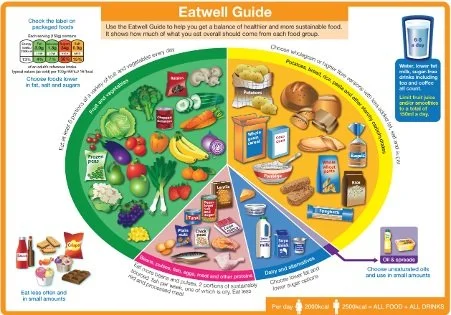
A 2023 study published in the British Journal of Nutrition [1], assessed children’s diets in relation to the Eatwell Guide (the UK government’s visual aid to educate the population on what a healthy balanced diet consists of) at ages 7, 10 and 13 years. The study highlighted overwhelmingly poor adherence to national dietary guidelines, with approximately 60% meeting fewer than three of the nine Eatwell Guide recommendations. People are falling short on fruit and vegetables, fibre and fish, and eating excessive saturated fat, sugar and salt.
So, if we could just get our children to eat a few more veggies, we’d be guaranteed the full smorgasbord of vitamins and minerals, right? Well, sadly maybe not.
Over the last 80 years the nutrient content of fruit, vegetables and staple grains has continued to decline. This is a perfect storm caused by a global shift to fast growing high-yielding strains or varieties of crops and dramatic depletion in the quality of the soil, where the plants derive most of their minerals. This soil depletion is caused by over-farming, inorganic herbicides and pesticides and the effects of rising environmental CO2 levels which change the acidity and microbial activity of the soil.
One UK study [2] compared the nutrient content of 20 vegetables between 1940-2019 and found staggering reductions in key minerals. The most significant declines were in sodium (52%), iron (50%), copper (49%) and magnesium (10%). Many salad vegetables are now grown in soilless systems, given only the nutrients the plant needs for growth, not those beneficial to us. Organic crops, grown in soil, tend to retain higher levels of nutrients beneficial to humans [3].
So not only are we not eating enough of the good stuff, but the good stuff isn’t as good as it should be! Surely that’s clear justification to add a supplement to support our diets and help close some nutrient gaps?
Despite the entirely sensible justifications of generalised low-quality diets coupled with reduced nutrient quality of our natural food, medical organisations caution against supplementing unless your child has a known deficiency, a chronic medical condition requiring nutritional support, a restricted diet such as veganism or is an extreme picky eater. But why?
It’s undoubtedly true that whole foods are the best source of nutrients, notwithstanding the reduction in density of micronutrients. Nature is clever and often naturally packages nutrients with key co-nutrients in the same foods, for example fat soluble vitamins (A, D, E and K) naturally occur in foods that contain the fat needed absorb them. Nutrients in whole foods tend to be more ‘bioavailable’, meaning they are better absorbed by the body.
But at the same time, some nutrients compete for absorption. Calcium, zinc, iron, and magnesium work in complex competition with each other and taking them together can block or limit absorption. As do vitamin C and B12, vitamin E and K, and zinc and copper. Fat-soluble vitamins must be consumed with fat to be absorbable by the body, so their effectiveness depends on what foods you take them with. All these factors erode the confidence that one multivitamin and mineral supplement offers the broad cover it promises and raises the possibility you’re wasting your money.
Wasting money is a chance many parents are willing to take, if there is also the chance of some nutritional benefit for their child. But is there a genuine risk of harm from giving kids these supplements?
Age-appropriate multivitamins and minerals produced by reputable manufacturers are unlikely to include mega-doses of each micronutrient, sticking around the recommended daily allowances for each nutrient. But are we unwittingly multi-dosing? There is a UK Government mandate to fortify non-wholemeal flours with iron, calcium, thiamine and niacin. Folic acid will be added to the list this year. Voluntary fortification of vitamin D is also approved. Breads, breakfast cereals, and many snacks are commonly fortified. Added to this, the food industry has started boasting added nutrients to sell products.
Water soluble vitamins (B vitamins and vitamin C) pass in our urine when we consume more than we need, but fat-soluble vitamins and many minerals are stored in the liver, where they can build up to toxic levels and cause some serious health complications if taken in excess. Calculating this layering effect is clearly beyond most of us consumers.
So, what to take from this muddle of conflicting factors?
Advice made for the population at large, is not the same as advice for an individual person. If you have concerns that your child is not covering their nutritional bases and may need to supplement, seek advice from a professional. Your child’s individual intake can then be assessed and their personal nutritional shortfalls addressed through food or supplements.
For me, I always try a food-first approach, hitting all those Eatwell Guide categories (see below). Adding in some organic produce, if your budget can accommodate it, should also boost the nutrient content.
If you decide a multivitamin and mineral supplement is the right thing for you and your child, check the nutritional information sits comfortably at or below the recommended daily allowance (RDA) particularly for the minerals and fat-soluble vitamins (A, D, E and K).
References
[1] Buckland G, Taylor CM, Emmett PM, Northstone K. Prospective association between adherence to UK dietary guidelines in school-age children and cardiometabolic risk markers in adolescence/early adulthood in the Avon Longitudinal Study of Parents and Children (ALSPAC) cohort. British Journal of Nutrition. 2023;130(10):1766-1778. doi:10.1017/S0007114523000685
[2] Mayer A.M.B., Trenchard L., Rayns F. Historical changes in the mineral content of fruit and vegetables in the UK from 1940 to 2019: A concern for human nutrition and agriculture. Int. J. Food Sci. Nutr. 2022;73:315–326. doi: 10.1080/09637486.2021.1981831. [DOI] [PubMed] [Google Scholar]
[3] Montgomery DR and Biklé A (2021) Soil Health and Nutrient Density: Beyond Organic vs. Conventional Farming. Front. Sustain. Food Syst. 5:699147. doi: 10.3389/fsufs.2021.699147